Top 10 Tips on How to Install Decorative Lighting Safely

Time:2026-10-18 Author:Henry
0%

Decorative lighting can transform a plain room, porch, or garden path within minutes. Yet beauty should never depend on luck. This guide, “Top 10 Tips on How to Install Decorative Lighting Safely,” explains practical steps for planning, mounting, connecting, and testing decorative fixtures. It focuses on real installation details, including warm bulbs above a dining table, cables near a damp patio door, and clips supporting a heavy garland. Small choices matter.

Electrical educator Mike Holt emphasizes, “When in doubt, turn it off and ask a qualified person.” That advice belongs at the center of how to install decorative lighting safely. Before touching a wire, readers should check the manufacturer’s instructions, inspect cords for cuts, and confirm that the circuit can handle the load. Outdoor installations also require weather-rated equipment and suitable ground-fault protection, according to local requirements. Never improvise with damaged plugs or exposed connections.

The safest process is rarely the fastest. Measure twice. Switch power off. Test before touching. A careful installer can still overlook heat buildup behind fabric shades or loose connections inside a ceiling box. That possibility deserves honest attention. When the fixture location, wiring, or mounting surface feels uncertain, a licensed electrician should review the work. This introduction leads into ten clear safety tips, combining hands-on experience, electrical knowledge, manufacturer guidance, and responsible judgment. The goal is simple: create inviting light without turning decoration into a preventable hazard.
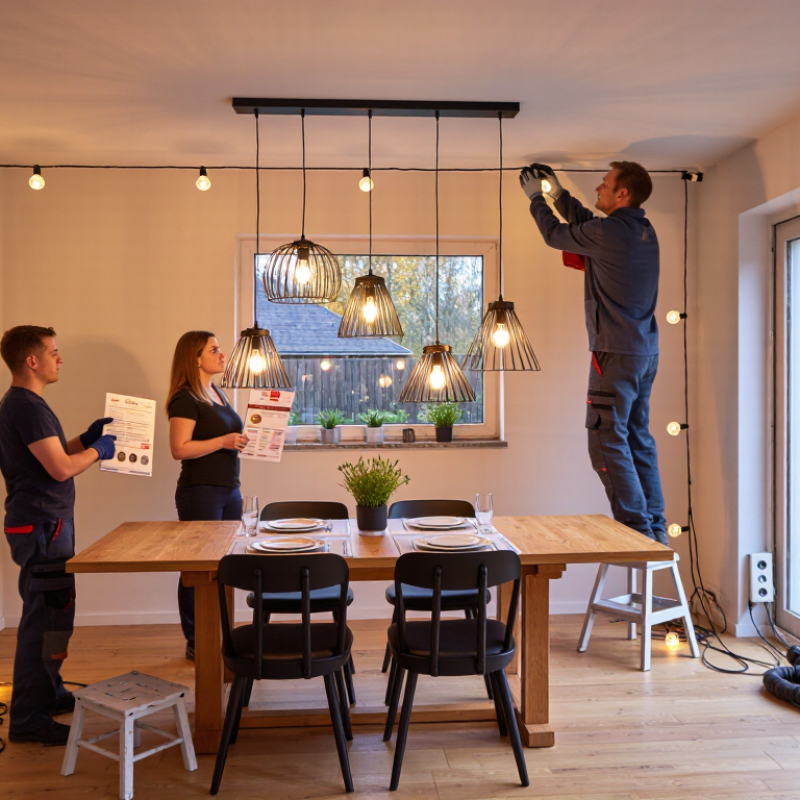
Top 10 Tips on How to Install Decorative Lighting Safely

Assess the Installation Area and Choose the Right Decorative Lighting

Before installing decorative lighting, inspect the area carefully. Check the ceiling or wall material, nearby pipes, insulation, and existing wiring. Look for dampness, peeling paint, heat sources, or unstable surfaces. A small pencil mark can reveal the best mounting position. Keep ladders on a level floor, and switch off power at the electrical panel before touching wires.

Tip: Match the light to its location. Damp rooms need fixtures rated for moisture, while outdoor areas require weather-resistant construction. Check the fixture’s weight against the mounting box and support structure. Measure the space, then consider brightness, beam direction, glare, and clearance from curtains or furniture. Warm light may suit a bedroom, but a workspace often needs clearer illumination.

Tip: Read the installation instructions twice. Confirm voltage, bulb limits, grounding requirements, and compatible dimmer controls. Never rely only on a wall switch; power can remain present in another circuit. A non-contact voltage tester adds useful protection, though it is not a complete safety check. I have found that rushed measurements cause more problems than difficult wiring. If the box feels loose, the cable insulation looks damaged, or the circuit is unfamiliar, stop and contact a qualified electrician. Better to pause.

Turn Off Power and Gather the Proper Safety Equipment

Before installing decorative lighting, switch off the correct circuit breaker, not only the wall switch. A wall switch may leave wires energized. Label the breaker and tell others not to restore power. If possible, use a lockout device or warning note. This small pause prevents a painful surprise. Test the fixture wires with a working voltage tester. Test the device on a known live source before and after checking. A dark fixture does not prove the circuit is safe.

Prepare safety glasses, electrical-rated gloves, insulated screwdrivers, wire strippers, approved wire connectors, and a stable fiberglass ladder. Keep every tool dry and inspect it for damage. Place a flashlight nearby. The room may become unexpectedly dim.

Never stand on furniture. Before touching any wire, confirm that power is off at the fixture and the breaker. Rushing this equipment check is an easy mistake, even during a simple replacement. I would rather spend five quiet minutes testing twice than guess once. Stop if wires are scorched, loose, or confusing, and contact a qualified electrician. Safety gear helps, but it cannot correct uncertain wiring or a damaged electrical box.

Top 10 Tips on How to Install Decorative Lighting Safely - Turn Off Power and Gather the Proper Safety Equipment
No. Safety Tip Recommended Action Why It Matters Useful Equipment or Check
1 Turn Off the Power Switch off the correct circuit breaker or remove the fuse before touching the existing light fitting. Do not rely only on the wall switch. A wall switch may not disconnect every energized conductor. Isolating the circuit reduces the risk of electric shock. Circuit directory, breaker or fuse panel, lockout or warning note where appropriate
2 Verify That the Circuit Is Dead Test the wires at the fitting with a properly functioning non-contact voltage tester and a two-pole voltage tester where suitable. Test the tester on a known live source before and after checking. Verification helps identify the wrong breaker, an incorrectly labeled panel, or another energized circuit. Voltage testers, insulated test probes, dry hands
3 Gather Appropriate Safety Equipment Prepare insulated tools, safety glasses, non-conductive footwear, a stable ladder, wire connectors, and a flashlight before starting work. Having the correct equipment reduces hurried work, dropped components, accidental contact, and trip hazards. Insulated screwdrivers, pliers, eye protection, flashlight
4 Use a Stable Working Position Place the ladder on a level, dry surface and keep both feet within the ladder's safe standing area. Ask another person to steady it when needed. Falls are a common risk when installing ceiling or wall lighting, especially while handling tools overhead. Approved step ladder, clear work area, assistant if necessary
5 Inspect the Existing Wiring and Box Check for damaged insulation, loose terminals, overheating marks, corrosion, a loose mounting box, or signs of water entry. Stop if any defect is found. Damaged wiring or an insecure electrical box can cause shock, short circuits, overheating, or fixture failure. Flashlight, visual inspection, qualified electrical assessment when needed
6 Confirm Load and Fixture Compatibility Check the fixture instructions and the circuit's voltage. Keep lamp wattage within the fixture rating and confirm that the mounting location can support the fixture's weight. Exceeding electrical or mechanical ratings can create excessive heat, structural failure, or premature damage. Installation instructions, fixture rating label, mounting hardware
7 Identify Conductors Before Disconnecting Photograph or label the existing connections before removal. Identify line, neutral, switched line, and protective earth or grounding conductors according to local wiring rules. Correct identification helps prevent reversed polarity, non-functional switching, and loss of grounding protection. Labels, pencil, camera, wiring diagram
8 Make Secure, Compatible Connections Use connectors approved for the conductor type and size. Ensure no bare copper extends beyond the connector, and gently tug each completed connection to check that it is secure. Loose or incompatible connections can increase resistance, generate heat, and cause arcing or intermittent operation. Correctly sized wire connectors, wire stripper, insulated tools
9 Secure the Fixture and Manage Cables Fasten the fixture to the appropriate electrical box or structural support using the supplied or correctly rated hardware. Keep wires away from sharp edges and hot surfaces. Proper support prevents the fixture from falling and protects cable insulation from mechanical or heat damage. Rated screws, mounting bracket, cable protection, level
10 Restore Power and Test Carefully Replace the cover, move clear of the fitting, restore power, and test the light and switch. Turn power off again if there is buzzing, flickering, heat, odor, sparking, or breaker tripping. Unusual symptoms may indicate a wiring fault, overload, poor connection, or damaged component that requires correction. Visual and functional check, voltage tester, qualified electrician if faults occur
Important: Electrical requirements differ by location. If the wiring is damaged, the circuit arrangement is unclear, the fixture is unusually heavy, or you are not confident identifying conductors, stop work and consult a qualified electrician.

Inspect Wires, Fixtures, and Mounting Surfaces Before Installation

Before installing decorative lighting, inspect every wire, fixture, and mounting surface. Turn off the circuit at the breaker, then verify it with a tested voltage detector. Do not rely on the wall switch alone. Look for cracked insulation, loose terminals, heat discoloration, corrosion, or exposed copper. Replace damaged components instead of wrapping them with tape.

The National Fire Protection Association reported an estimated 32,620 U.S. home fires involving electrical distribution and lighting equipment each year from 2015 to 2019. These fires caused about 470 deaths and 1,100 injuries annually. The numbers are sobering.

Check the fixture’s socket, strain relief, grounding path, and rated load. A warm plastic smell or flickering lamp signals a problem, not decoration. Examine the ceiling or wall closely. Drywall anchors may fail under a heavy pendant, while cracked timber can split around a screw. Confirm the fastener reaches sound material and supports the fixture’s full weight.

The U.S. Consumer Product Safety Commission repeatedly warns consumers to inspect damaged cords and lighting products before use. In practice, a surface can look solid while hiding water damage or weak framing. I would rather pause than guess. If wires are brittle, the box moves, or the mounting point feels uncertain, stop and request evaluation from a qualified electrician. Even careful installers miss hidden defects sometimes. That possibility deserves respect.

Install and Connect the Lighting Fixture According to Instructions

Installing decorative lighting safely begins with reading every instruction, not just the wiring diagram. Instructions specify mounting methods, bulb limits, wire connections, and suitable locations. Switch off the correct circuit breaker, then verify the wires are dead with a properly rated voltage tester. Test the tester before and after checking. Electricity can remain present when labels are unclear.

I once rushed a fixture replacement and nearly overlooked a loose mounting bracket. That small mistake could have allowed the fitting to shift under its own weight. Secure the bracket to a suitable junction box or structural support. Check that the box can carry the fixture. Keep the power off while identifying each conductor. Do not rely on wire color alone, especially in older installations. Connect line, neutral, and ground exactly as shown in the instructions. Use approved connectors, leave no exposed copper, and tighten connections firmly without crushing the wires.

The fixture should sit level, with cables protected from sharp edges. Confirm the fixture’s location rating before installing it near moisture. A bathroom or covered outdoor area may require special protection. Never exceed the stated lamp wattage. Restore power only after fitting the cover and checking every screw. Watch for flickering, unusual heat, buzzing, or a burning smell. Stop immediately if anything seems wrong. A qualified electrician should handle damaged wiring, uncertain circuits, or installations that conflict with local electrical requirements. Safety instructions sometimes feel repetitive. They are not.

Test the Lighting System and Check for Potential Safety Hazards

Top 10 Tips on How to Install Decorative Lighting Safely

Testing should begin before the first bulb is switched on. Inspect every cable for crushed insulation, exposed copper, brittle areas, and loose connectors. Check sockets for discoloration or heat marks. Confirm that the circuit is de-energized before touching fixed wiring. In practice, a light that works is not necessarily a safe light. NFPA’s Home Structure Fires report for 2016–2020 found that electrical distribution and lighting equipment appeared in 32% of reported home structure fires. That figure deserves attention.

Use a socket tester or suitable multimeter to check polarity, continuity, and grounding. Test the protective device, such as an RCD or GFCI, using its test button. It should trip promptly. Reset it only after finding no obvious fault. Connect the lighting system gradually, not all at once. Watch for flickering, buzzing, unusual warmth, burning smells, or repeated trips. Stop immediately if any appear. Do not hide extension connections beneath rugs, curtains, or furniture. Outdoor fittings need weather protection, and damp plugs require extra caution.

Leave the lights running briefly under supervision. Then feel the plug and nearby connectors carefully; they should not become noticeably hot. A warm connection is easy to dismiss. That is a mistake. The Electrical Safety Foundation International reports that electrical failures and malfunctions remain major contributors to home fire risk. I would still recheck the installation the next day, because loose terminals may reveal themselves only after heating and cooling cycles. Fixed wiring, damaged cables, or uncertain test results require a qualified electrician.

FAQS

How should I inspect an area before installing decorative lighting?

Check the ceiling, wall material, pipes, insulation, wiring, and nearby heat sources. Look for dampness, peeling paint, or unstable surfaces. A small pencil mark can help identify a secure mounting position.

How do I choose lighting for a specific location?

Use moisture-rated fixtures in damp rooms and weather-resistant fixtures outdoors. Check the fixture’s weight against the mounting box and support structure. Consider brightness, glare, beam direction, curtains, and furniture clearance.

What should I confirm in the installation instructions?

Confirm voltage, bulb limits, grounding requirements, and dimmer compatibility. Read the instructions twice. Small details are easy to overlook.

Is turning off the wall switch enough?

No. Turn off the correct circuit breaker at the electrical panel. Test the wires with a working voltage tester before touching them. A dark fixture does not prove the circuit is safe.

What safety equipment should I prepare?

Use safety glasses, electrical-rated gloves, insulated screwdrivers, wire strippers, approved wire connectors, and a stable fiberglass ladder. Keep tools dry and place a flashlight nearby. The room may become unexpectedly dim.

What wiring problems require professional help?

Stop if wires look scorched, loose, brittle, corroded, or confusing. Damaged insulation and exposed copper need proper replacement. Contact a qualified electrician rather than guessing.

How can I check whether the mounting surface can support the fixture?

Confirm that fasteners reach sound material and support the fixture’s full weight. Drywall anchors may fail under a heavy pendant. Cracked timber can split around a screw.

What signs suggest the fixture itself may be unsafe?

Watch for cracked insulation, loose terminals, flickering, corrosion, or a warm plastic smell. Inspect the socket, strain relief, grounding path, and rated load. I still recheck simple replacements because rushed work creates avoidable mistakes.

Conclusion

Learning how to install decorative lighting safely begins with assessing the installation area and selecting a fixture that matches the room, ceiling, wall, and electrical requirements. Before starting, switch off the power at the circuit breaker and use appropriate safety equipment, such as insulated tools, protective eyewear, and a stable ladder. Carefully inspect the wires, fixture, junction box, and mounting surface for damage, loose connections, moisture, or weakness. Any unsafe condition should be corrected before installation.

Follow the fixture’s instructions when securing the mounting hardware, connecting the wires, and positioning the light. Keep connections tight, properly insulated, and protected inside the electrical box, while ensuring that no wires are pinched or exposed. Once installation is complete, restore power and test the lighting system. Check for flickering, unusual sounds, heat, loose components, or other potential hazards. If anything appears unsafe or unclear, turn off the power and consult a qualified electrician.

Henry

Henry

Henry is a dedicated marketing professional with a profound expertise in the company's offerings. With years of experience in the industry, he possesses an impressive understanding of the market dynamics and consumer behaviors that drive success. Henry is committed to sharing his insights through......