How Decorative Lighting Improves Interior Design in 2026?

Time:2026-09-28 Author:Oliver
0%

In 2026, decorative lighting is doing more than filling a room with brightness. It shapes atmosphere, guides attention, and gives everyday spaces a more personal feel. A low pendant above a dining table can make a meal feel intimate; a shaded wall light can soften a hard corner. Small changes matter.

So, how does decorative lighting improve interior design? It adds depth through contrast, highlights materials and artwork, and helps define zones without adding walls. But a beautiful fixture alone cannot fix a room that feels uncomfortable. Glare, poor placement, and bulbs with the wrong color temperature can undermine the effect. That sounds obvious. It is often overlooked.

The broader energy context also matters. The IEA and UNEP’s 2024 Global Status Report for Buildings and Construction estimates that buildings account for about 32% of global energy use and 34% of energy-related carbon emissions. These figures cover buildings overall, not decorative lighting specifically. Still, they reinforce the value of thoughtful, efficient choices. The U.S. Department of Energy notes that LED bulbs use at least 75% less energy than incandescent lighting and can last up to 25 times longer. For homeowners and designers, that means a decorative scheme can balance visual impact with practical performance. In the sections ahead, we’ll look at scale, layering, color, placement, and energy-conscious selection. Not every trend will suit every home, and some lighting choices may need adjustment after living with them. That is part of good design.
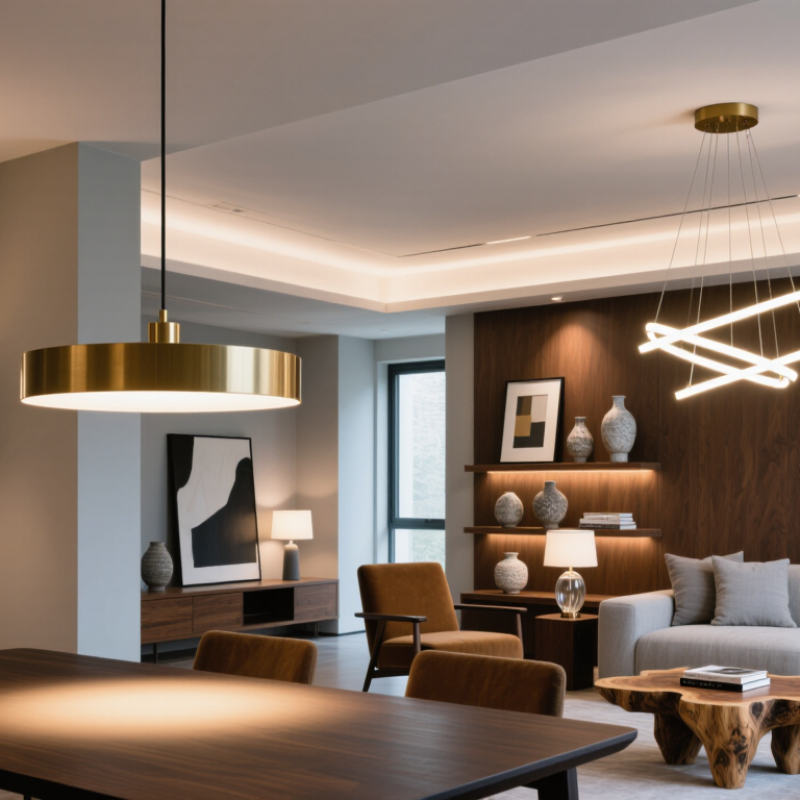
How Decorative Lighting Improves Interior Design in 2026?

What Decorative Lighting Means in Interior Design

Decorative lighting is the visible, expressive layer of a room’s lighting plan. It includes pendants, chandeliers, wall sconces, and table lamps chosen partly for their shape, material, or visual presence. Unlike concealed or purely task-focused lights, these fixtures become part of the interior’s composition, even when switched off. A shallow brass pendant above a dining table, for example, can echo warm hardware nearby and give the table a clear focal point.

It still needs to work.

A beautiful pendant that leaves dinner plates in shadow is not doing enough. Consider the fixture’s scale, mounting height, light direction, and the room’s surface finishes. A frosted shade may soften glare, while a bare bulb can create sharp reflections on a glossy table. Small choices matter. Decorative lights often look different at night than they do in a showroom, so dimming and bulb color deserve attention. There is no perfect formula; matching every fixture can feel stiff, but mixing too many shapes can make a room restless. The useful balance is personal, and sometimes the first choice needs adjusting.

How Decorative Lighting Differs from Ambient and Task Lighting

In 2026 interiors, decorative lighting gives a room its visual signature. Ambient lighting provides broad, comfortable illumination; task lighting directs brighter light onto activities such as reading or chopping. Decorative lighting draws attention to form, material, and mood. A sculptural pendant above a dining table can become a focal point, while a small ceramic lamp softens a shadowed shelf. The categories can overlap: one pendant may look striking and still help light the room.

The distinction is purpose, not just fixture type. A decorative lamp should earn its place through proportion and placement, rather than merely filling an empty corner. Check glare, shade height, and how its light falls on nearby surfaces. A beautiful fixture can still feel wrong if it shines into seated eyes. There’s no perfect formula. The U.S. Department of Energy’s Energy Saver guidance says LEDs use at least 75% less energy and last up to 25 times longer than incandescent lighting. That makes efficient bulbs practical for decorative fixtures used for long evening hours, though dimmer compatibility and color quality still matter.

How Decorative Lighting Improves Interior Design in 2026: Decorative vs. Ambient vs. Task Lighting

Design Dimension Decorative Lighting Ambient Lighting Task Lighting
Primary purpose Add visual character and make a fixture a noticeable part of the room’s design. Provide general illumination so people can move through and use a space comfortably. Direct light onto a specific area for activities that need clearer visibility.
Typical fixtures Statement pendants, chandeliers, sculptural floor lamps, and decorative wall sconces. Ceiling-mounted fixtures, recessed downlights, and indirect cove lighting. Desk lamps, reading lights, under-cabinet lights, and adjustable work lights.
Common placement Over a dining table, beside a bed, in an entryway, or at a focal point in a living room. Distributed across the ceiling or reflected from walls and ceilings to light the room broadly. Close to the task, such as above a kitchen counter or beside a reading chair.
Light distribution Varies by fixture: it may cast light upward, downward, outward, or in several directions. Usually aims for broad, relatively even coverage rather than one small illuminated area. Concentrates illumination where a visual task is performed, helping reduce reliance on room-wide light.
Contribution to interior design Creates a focal point, reinforces a chosen style, adds visual rhythm, and can introduce texture or color. Establishes the room’s overall brightness and helps reveal its layout, surfaces, and colors. Supports practical use while adding localized contrast and depth to a lighting scheme.
Best considered with Fixture scale, hanging height, shape, material, and how the fixture looks when switched off. Room size, ceiling height, surface reflectance, light distribution, and the intended atmosphere. Task location, beam direction, glare control, shadow placement, and available work surfaces.
Useful controls A dimmer can adjust its prominence and help shift the mood between everyday use and entertaining. Separate switching or dimming can make broad room light easier to adapt to different activities. Adjustable heads, local switches, or dimming can help tailor light to the task and user.
Design note Decorative appearance does not guarantee sufficient room or task illumination; consider its light output as well as its form. Ambient light alone may not provide enough illumination for detailed activities or create enough visual emphasis. Task light works best when positioned to limit glare and avoid casting the user’s own shadow onto the work.
How the layers work together Supplies visual interest and character within a layered lighting plan. Forms the general foundation of the room’s lighting. Adds focused illumination where specific activities take place.

A well-planned interior often combines all three lighting types. The same fixture can serve more than one role depending on its light output, direction, placement, and use.

Key Decorative Lighting Types and Their Design Functions

Decorative lighting works best when each fixture has a clear role. Pendants and chandeliers draw the eye above a dining table, while also providing ambient light. A low-hanging pendant can make a tall room feel more intimate. Scale matters. An oversized shade may crowd a small breakfast nook, even when its finish looks perfect.

Wall sconces add softer light beside a mirror or along a hallway, reducing harsh shadows on faces. Table lamps bring pools of light to reading corners, and floor lamps can brighten a dark wall without major renovations. Use warm-toned bulbs in living areas, but check the bulb’s color temperature before buying; “warm white” can vary between products. A mismatched pair may look intentional, or simply unfinished.

Decorative fixtures also need efficient light sources. The U.S. Department of Energy’s Energy Saver guidance states that LED bulbs use at least 75% less energy and last up to 25 times longer than incandescent bulbs. That makes LEDs practical for frequently used pendants and sconces, provided the bulb is compatible with the fixture and dimmer. One easy mistake is choosing a striking fixture before checking where its light falls. Test the effect after dark; a beautiful shade can still leave the work surface dim.

How Decorative Lighting Improves Interior Design in 2026

Key Decorative Lighting Types and Their Design Functions

Decorative fixtures add character and visual focus, while layered ambient, task, and accent lighting make rooms practical. These typical illuminance planning targets are measured in lux at the relevant surface; actual needs vary with the task, room, and user.

How to Choose and Position Decorative Lighting in a Room

Decorative lighting should support a room’s use, not simply fill an empty corner. Start with the activity: a pendant over a dining table, a shaded lamp beside a reading chair, or a small wall light near a hallway mirror. Place fixtures where their glow reaches people and surfaces, rather than shining directly into eyes. Small changes matter.

Layer ambient, task, and accent light, then check the room after dark. A floor lamp can soften a bare corner, while a picture light draws attention to artwork without flooding the whole wall. The Illuminating Engineering Society’s Recommended Practice for residential lighting, RP-11-20, offers guidance for planning comfortable home lighting. The U.S. Department of Energy estimates that lighting uses about 15% of household electricity, so efficient bulbs and dimmers can also help reduce energy use (DOE, Energy Saver: Lighting Choices to Save You Money).

Before fixing a fixture’s position, test it at the time you will actually use the room. A lamp that looks balanced at noon may cast a harsh reflection on a television at night. That detail is easy to miss. I’d also resist matching every fixture; a little inconsistency can feel more human, though it may take a second adjustment to get right.

2026 Trends Shaping Decorative Lighting and Interior Design

In 2026, decorative lighting is less about a single statement fixture and more about how several sources work together. A pendant can anchor a dining table, while a shaded floor lamp softens the far corner. The room feels layered, not merely brighter. Scale matters: a small fitting above a wide table can look lost, even when its shape is beautiful.

Sculptural forms remain popular, but visual impact is increasingly balanced with practical light. Expect textured glass, ceramic shades, and finishes that show their material character. Warm, dimmable light can make a living room feel calmer after sunset, while adjustable task lighting keeps a kitchen counter usable. Smart controls may help shift scenes through the day, though complicated settings can become a nuisance. Simple is often better.

A useful approach is to test the effect before committing. Move a lamp, switch off the overhead light, and notice where shadows fall. A striking fixture may create glare if viewed from the sofa, or leave a reading chair dim. That is easy to miss in a showroom. Trends can inspire a room, but they do not solve every layout; sometimes the best choice is quieter, and a little less polished.

FAQS

Which decorative light works best above a dining table?

A pendant or chandelier can anchor the table and provide ambient light. A low-hanging pendant may make a tall room feel more intimate. Check its size; an oversized shade can crowd a small breakfast nook.

How can I soften light beside a mirror?

Wall sconces placed beside a mirror can reduce harsh facial shadows. Aim their glow toward people and surfaces, not directly into anyone’s eyes. Small changes matter.

What lighting suits a reading corner?

A shaded table lamp beside a reading chair creates a focused pool of light. A floor lamp can brighten a dark wall without renovations. Test it after dark.

How should I layer lighting in one room?

Combine ambient, task, and accent lights. For example, use a pendant for general light, a lamp for reading, and a picture light for artwork. It can take a second adjustment.

Are LED bulbs practical for decorative fixtures?

LEDs use at least 75% less energy and can last up to 25 times longer than incandescent bulbs. Check bulb and dimmer compatibility before buying. Compatibility matters.

What decorative lighting styles are gaining attention in 2026?

Layered lighting and sculptural forms remain popular. Textured glass, ceramic shades, and material-focused finishes add visual character. Trends can inspire, but they cannot fix every layout.

How can I avoid glare from a new fixture?

View the fixture from your sofa and reading chair, then notice where shadows fall. A beautiful shade may still leave a work surface dim. Showrooms can be misleading.

Do all fixtures in a room need to match?

No. A little variation can feel more personal, such as pairing a ceramic table lamp with a simple pendant. It may look unfinished at first, so trust your eyes—and reconsider if it still feels off.

Conclusion

Decorative lighting is both a source of illumination and a design feature that adds character, depth, and visual interest to a room. Unlike ambient lighting, which provides general light, or task lighting, which supports activities such as reading or cooking, decorative lighting draws attention to shapes, materials, and focal points. Chandeliers, pendants, wall sconces, and table or floor lamps can each contribute a distinct mood while complementing a room’s style.

To understand how does decorative lighting improve interior design, consider how the right fixture can balance a space, highlight architectural details, and create inviting layers of light. Choose fixtures in proportion to the room and place them where they enhance both the layout and the atmosphere. In 2026, interior design favors thoughtful combinations of sculptural forms, warm light, natural-looking materials, and flexible lighting arrangements. The result is a home that feels personal, comfortable, and visually cohesive.

Oliver

Oliver

Oliver is a seasoned marketing professional with a wealth of expertise in driving brand awareness and engagement. With a deep understanding of our company's product offerings, he consistently delivers high-quality content that enriches our professional blog. His insights not only shed light on......