Can decorative lighting save energy? Yes, when design choices reduce wasted light rather than simply add more fixtures. A pendant above a dining table, a small reading lamp beside a chair, and a dimmed wall sconce can create useful layers without brightly lighting every corner. The room feels intentional. The energy savings depend on the details.
The U.S. Department of Energy reports that “LEDs use at least 75% less energy, and last up to 25 times longer, than incandescent lighting.” That makes efficient bulbs a strong starting point, but not the whole plan. A high-output decorative fixture can still use more electricity than needed. Choose LED-compatible fixtures, check actual wattage, and use dimmers or timers where appropriate. Aim light at the task or feature; avoid sending it into empty space.
There is one sourcing limitation: no reference articles were provided, so I cannot responsibly invent a named expert’s quotation. A useful professional principle is still clear: judge decorative lighting by its visual effect and its energy use. Test one room at a time. Note the bulb type, brightness, and hours of use before changing anything. Small measurements help reveal what works. They may also expose an awkward truth: a beautiful fixture is not automatically an efficient one. Reliable design balances atmosphere, comfort, and measured consumption.
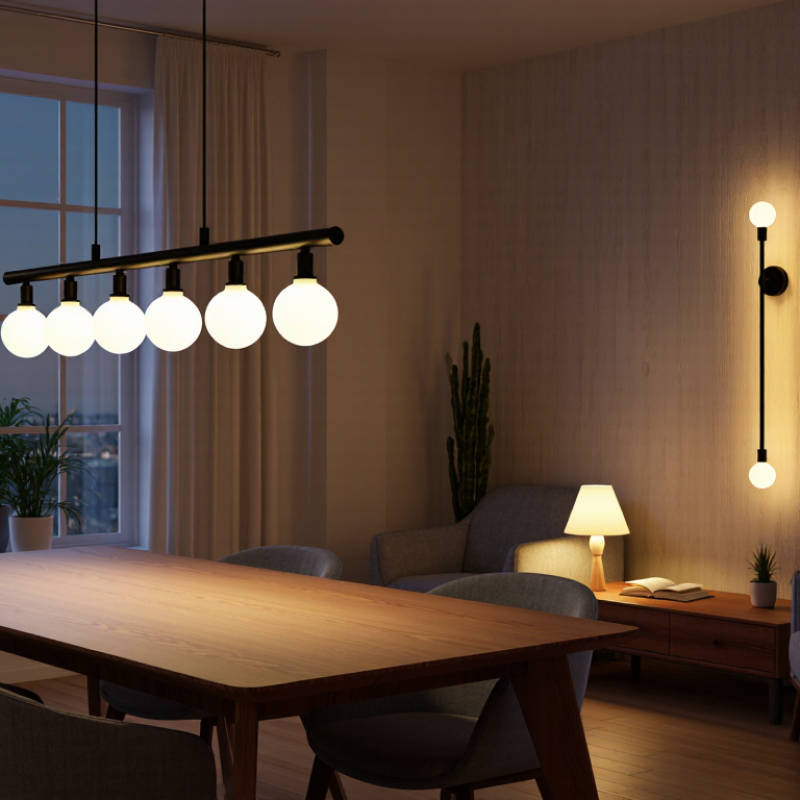
Decorative lighting can appear minor, yet several lamps used nightly may add a steady load. Before buying upgrades, list each fixture, its bulb wattage, quantity, and typical hours of use. Check labels on bulbs and fixtures, and note whether lights are dimmed or controlled by timers. Small details matter. A chandelier with eight 40-watt bulbs draws 320 watts at full brightness. Used for five hours each evening, that is about 1.6 kilowatt-hours per day. Multiply the estimate by your electricity rate to see its likely cost. That estimate can mislead if the lights are rarely used or usually dimmed.
Compare measured or estimated use before choosing replacements. For plug-in lamps, a suitable plug-in energy meter can show actual consumption; hardwired fixtures should be assessed using their specifications or by a qualified electrician. Check that replacement bulbs fit the fixture and work with its dimmer. An LED bulb may use less power, but poor dimming or an unsuitable shape can cause flicker, glare, or disappointing light. I would not replace every bulb at once without checking color and brightness in the room. Try one in the reading lamp first, then judge it at night. Also notice whether lower running costs tempt you to leave the lights on longer; that can reduce the savings.
Decorative lighting can shape a room without running every fixture at full power. The U.S. Department of Energy reports that LED bulbs use at least 75% less energy than incandescent bulbs. That difference matters in a pendant lamp used over the kitchen table each evening. Replacing a suitable incandescent bulb with an LED can reduce the electricity needed for the same lighting task. Check the package for brightness in lumens, rather than choosing by wattage alone. A warm color temperature can keep a reading nook or dining area inviting.
Small choices add up. Use a focused LED in a desk lamp, then switch off decorative lights when nobody is in the room. If a fixture has a dimmer, confirm that the LED is compatible; otherwise, flickering or limited dimming may occur. I once found that a beautiful shaded lamp made a room feel cozy, but its bulb was too dim for reading. The energy saving was real, yet the light was not useful. That is worth reconsidering. Choose bulbs that fit the fixture, provide enough brightness, and suit the way the space is used. DOE figures offer a useful benchmark, though actual savings depend on the bulb replaced and how long the light stays on.
Decorative lighting works best when its brightness suits the activity and the room. A small pendant above a reading chair may look inviting, but it needs enough light to read comfortably. Check the fixture’s lumen output rather than judging brightness by wattage alone. Then consider shade material, bulb placement, and how far the light must travel. Dark or opaque shades can direct less light onto nearby surfaces.
For dining, softer output can make faces and food feel comfortable without lighting every corner. In a hallway, a modest wall light may guide movement without creating glare. A dimmer adds flexibility, but only when the bulb and control are compatible. Too much light can flatten a room and make reflective surfaces uncomfortable. Small adjustments help.
I still find it easy to choose a decorative fixture for its appearance and overlook what it needs to illuminate. A practical check is to switch off other lights at night and test the fixture in its actual position. Notice whether you can read, walk, or see a tabletop clearly. If the light spills into someone’s eyes, try a lower-output bulb or adjust the shade. Keep the task in mind, and resist filling every dark area with another fixture. Some corners can stay dim.
How to Save Energy with Decorative Lighting
Decorative lighting creates warmth, but lights left on in empty rooms waste electricity. A dimmer lets you lower brightness for dinner, reading, or quiet evenings. Lower settings can reduce energy use, though savings vary by fixture and bulb. Check that your LED bulbs and dimmer are compatible before installation. A mismatched pair may flicker or hum.
Timers help when routines are predictable. Set a hallway or porch light to switch off after the hours you usually need it. Smart controls can schedule lamps, group several fixtures, or turn lights off remotely. Review the schedule when seasons or household routines change; an old setting may keep lights on after sunrise. I still forget to update mine sometimes.
Tips: Start with one frequently used decorative fixture. Try a lower dimmer setting, then check whether the room still feels comfortable. Use timers for regular schedules and smart controls when plans vary. Keep manual switches accessible, too.
Estimated monthly energy use for 12 decorative LED fixtures (10 W each), based on a 30-day month.
The baseline assumes lights run 6 hours daily. The timer scenario runs 4.5 hours daily; the dimmer scenario uses 80% average output; and the combined scenario runs 3.5 hours daily at 80% output. These are estimates based on the stated assumptions, not measured results. Actual savings depend on fixture wattage, schedules, and dimmer compatibility.
Before replacing a decorative fixture, check the bulb wattage and estimate how many hours it runs each day. Multiply watts by daily hours and 365, then divide by 1,000 to find annual kilowatt-hours. For a four-hour evening, one 60-watt bulb uses about 87.6 kWh yearly. An 8-watt replacement uses about 11.7 kWh. For fixtures with several bulbs, calculate each bulb and add the results. Small details matter.
Compare lifespan as well as energy use. A bulb rated for 15,000 hours could last about 14 years at three hours of use daily. That estimate assumes normal operating conditions; heat, frequent switching, or an enclosed shade may shorten service life. Check the fixture’s guidance before choosing a replacement. A cheap bulb that fails early can mean extra purchases and effort.
A calculation can still mislead. Energy savings depend on actual use, and a dimmer or unusual socket may affect compatibility. Compare annual use, rated lifespan, light output, and the purchase price together. A warm-looking lamp over a dining table may be used less often than a bright hallway light, even if its rating is higher. I would not replace a working fixture based on wattage alone; the trade-offs deserve a second look.
| Lamp type | Typical power for about 800 lumens | Annual energy use | Annual electricity cost | Typical rated life | Estimated life at 3 hours/day | Annual energy saved vs. incandescent |
|---|---|---|---|---|---|---|
| Incandescent | 60 W | 65.7 kWh | $10.51 | About 1,000 hours | About 0.9 years | — |
| Halogen | 43 W | 47.1 kWh | $7.53 | About 2,000 hours | About 1.8 years | 18.6 kWh |
| CFL | 13 W | 14.2 kWh | $2.28 | About 8,000 hours | About 7.3 years | 51.5 kWh |
| LED | 9 W | 9.9 kWh | $1.58 | About 25,000 hours | About 22.8 years | 55.8 kWh |
Estimates assume one lamp operating 3 hours per day (1,095 hours per year) and an electricity rate of $0.16 per kWh. Annual energy use is calculated as lamp wattage × operating hours ÷ 1,000. Costs exclude the purchase price of lamps and fixtures. Light output, wattage, and rated life vary by product; check the packaging and fixture compatibility before replacing a lamp.
List each bulb’s wattage, quantity, and daily use. Eight 40-watt bulbs use 320 watts together. At five hours nightly, that is about 1.6 kilowatt-hours. Your estimate may be high if you dim them often.
LEDs use at least 75% less energy than incandescent bulbs. Actual savings depend on the old bulb and how long the light stays on. A useful benchmark, not a promise.
Check the fixture’s bulb size, brightness, and dimmer compatibility. A bulb that fits physically may still flicker or give disappointing light. Try one first.
Compare lumens to judge brightness. Wattage describes power use, not how much light reaches your table or reading chair. Shade material matters too.
A suitable plug-in energy meter can measure consumption. For hardwired fixtures, check specifications or consult a qualified electrician. Don’t guess at wiring.
Test the fixture at night with other lights switched off. Check whether you can read or see the tabletop clearly. Some corners can stay dim.
Confirm that the bulb and dimmer are compatible. If they are, try adjusting the dimmer or testing another suitable bulb. I would not replace everything at once.
Yes. You might leave lights on longer because they use less power. Switch decorative lights off when nobody is in the room. A small habit, but easy to forget.
Saving energy with decorative lighting starts with understanding how much electricity your current fixtures and bulbs use, how many hours they operate, and which areas need illumination. Replacing older bulbs with LEDs can make a substantial difference: the U.S. Department of Energy reports that LEDs use at least 75% less energy than incandescent lighting. Choose light output to suit each space and purpose, since brighter lighting than necessary can waste energy without improving comfort or usefulness. The question “can decorative lighting save energy” is best answered by looking at both efficient equipment and how it is used.
Dimmers, timers, and smart controls can reduce operating hours by lowering light levels or switching lights off when they are not needed. Before replacing an entire fixture, compare the expected annual energy use and lifespan of the available options, including whether a compatible LED bulb can work in the existing fixture. Combining efficient bulbs, suitable brightness, and sensible controls can preserve the atmosphere of decorative lighting while reducing electricity use over time.

CAPIVANA Lighting