Why Does Lighting Make a Room Look Bigger?

Time:2026-11-18 Author:Liam
0%

Why Does Lighting Make a Room Look Bigger?

A small room can feel cramped even when its floor plan is practical. Often, the ceiling light is doing too much. One bright fixture may leave corners dim, flatten wall color, and create hard shadows around furniture. Light changes how clearly we see edges, surfaces, and depth. That is why how to make a room look bigger with lighting starts with spreading light across the room, not simply choosing a brighter bulb.

The U.S. Department of Energy’s Energy Saver guidance reports that LEDs use at least 75% less energy and can last up to 25 times longer than incandescent bulbs. That efficiency makes layered lighting easier to use for longer periods: a ceiling fixture for general light, a shaded lamp beside a chair, and a soft wall wash near a dark corner. Lighting designer Randall Whitehead’s guidance emphasizes combining ambient, task, and accent lighting. In paraphrase: “Use layers of light to give a room more visual depth.” Treat that as practical design advice, not a guarantee. A poorly aimed lamp can still glare on a television or spotlight clutter.

Try a simple test. Turn off the overhead light, then switch on two lamps at different heights. Notice the far wall. Does it feel closer, or more open? The effect depends on the room’s color, window light, and finishes. I would not expect lighting alone to fix a crowded layout. But it can soften boundaries, reveal useful detail, and make a compact room feel more welcoming. Small change. Real difference.
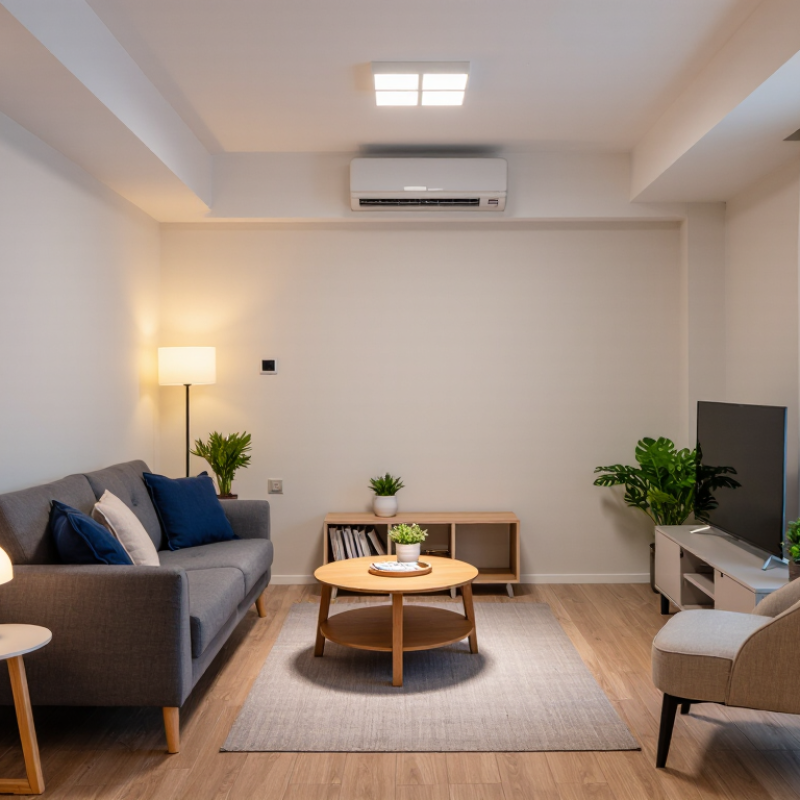
Why Does Lighting Make a Room Look Bigger?

How Human Vision Interprets Light and Space

Why Does Lighting Make a Room Look Bigger?

Human vision judges space through edges, shadows, and differences in brightness. When a dark corner blends into a shadow, the room can seem to end sooner. Soft, even light reveals more of the wall and floor, helping the eye read the full shape of the room. Light aimed upward can also brighten the ceiling, making it feel less heavy. The effect is subtle, not magic. A bright bulb cannot fix a cramped layout.

The Illuminating Engineering Society’s residential lighting guidance uses roughly 100 lux as a reference for general ambient light, with about 300 lux for reading areas. These figures show why one dim ceiling fixture may leave a room visually uneven. Try spreading light across several surfaces instead: a shaded lamp near a sofa, a wall light, or daylight reaching a pale wall. Shiny surfaces can help, but too much glare creates sharp reflections and visual clutter. I still find it easy to over-light a small room.

Tips: Use warm, diffused light in corners, and keep brighter task lighting near books or work surfaces. Leave a little shadow; a room does not need to look uniformly bright to feel open.

How Brightness Reveals a Room’s Boundaries

Why Does Lighting Make a Room Look Bigger?

How Brightness Reveals a Room’s Boundaries

A room can feel larger when its edges are easy to see. Even, gentle light reveals where walls meet the ceiling and where a corner turns. When those boundaries disappear into shadow, the space may seem cramped or oddly unfinished. A bright ceiling and softly lit walls can create a more open impression without changing the room itself. Light does not add space. It makes existing space easier to read.

Tips: Use more than one light source. A floor lamp can brighten a dim corner, while a table lamp softens a harsh overhead glow. Keep bulbs similar in color so the room feels coherent, not patchy. Notice how the light falls at night; daylight can hide uneven spots.

Reflective surfaces help, but too much glare can make a room feel uncomfortable. In a narrow hallway, for example, a shaded wall light may reveal the full length more clearly than a bright bare bulb. Try adjusting one fixture at a time. The result may still feel smaller than expected, especially when furniture blocks the light. That is useful information, too: brightness works best when it supports clear sightlines rather than simply filling every corner.

How Light Direction Influences Perceived Depth and Height

Light changes how clearly we read a room’s edges. Light aimed upward can brighten the ceiling and make it feel higher, especially when the ceiling is pale and unobstructed. A floor lamp washing light across a ceiling often creates this effect more gently than a bright bulb pointed straight down.

Direction matters. Light grazing along a wall reveals texture and creates soft shadows, which can add depth. But strong side lighting may also exaggerate bumps or uneven paint. I’ve found that a small lamp near a wall can make a narrow corner feel more layered, though the result depends on the wall color and furnishings. It is not magic.

To suggest more width, spread light across the far wall rather than concentrating it in the center of the room. A brighter back wall can appear farther away, while dark, sharply defined corners may feel closer. For height, keep the upper walls and ceiling relatively bright, and avoid a single harsh pool of light on the floor. Try moving one lamp a few feet and observing the shadows at eye level. Small changes can help. The effect may be subtle, and sometimes the room still feels cramped.

How Shadows and Contrast Affect Spatial Perception

Shadows can make a room feel smaller when they gather in corners, under furniture, or along dark walls. A single ceiling light often creates this effect: bright floor, dim edges. Add softer light near a wall, and the boundary becomes easier to see. The room may feel wider, even though its dimensions have not changed. Contrast matters, too. A sharp, dark patch beside a bright surface draws the eye and makes the change in depth feel stronger. Gentle transitions usually feel calmer. Small difference, big effect.

A useful benchmark comes from BS EN 12464-1:2021, which specifies 500 lux maintained illuminance and a UGR limit of 19 for office reading and writing areas. Those figures are not a home-room recipe; they show how standards separate light level from glare control. For a living room, try bouncing light onto a pale wall rather than aiming every lamp downward. Notice what happens beside the bookcase and behind the sofa. If those areas disappear into shadow, the room can seem compressed. I still find this tricky: brighter is not always better. A bare bulb can create harsher contrast, while a shaded lamp reveals more of the wall. The result depends on surface color, furniture, and viewing angle.

How Lighting Choices Can Make a Room Look Larger

Lighting can change how large a room feels by guiding the eye across its surfaces. A single bright ceiling fixture often leaves corners dim, making walls seem closer. Instead, spread light around the room with a ceiling wash, a table lamp, or wall lights. When light reaches the walls, the edges feel less boxed in. In a narrow room, a lamp aimed toward the far wall can draw the eye outward. Small shifts matter.

Tips: Use sheer curtains to preserve daylight, and place lamps at different heights. Choose bulbs with a similar color tone so the room feels cohesive. Keep shades or fixtures from blocking light onto nearby walls. Test one change at a time, especially in rooms with dark paint or low ceilings.

Bright does not always mean spacious. Glare on a polished floor can make a room feel harsh, while deep shadows can hide its full shape. A mirror may help spread daylight, but its placement matters: reflecting a blank wall adds little. The effect also depends on window direction and furniture layout. Lighting is not a magic fix, and a setup that looks balanced at noon may feel uneven at night. Adjust lamps after sunset, when the room’s darker corners become easier to spot.

Why Does Lighting Make a Room Look Bigger? — How Lighting Choices Can Make a Room Look Larger

Lighting can influence how spacious a room feels by making surfaces easier to see, softening dark corners, and drawing the eye through the space. These practical choices work best alongside clear sightlines and appropriately scaled furnishings.

Lighting choice How it can affect perceived space Practical application Helpful consideration
Layered ambient lighting Even, general illumination can reduce strong contrasts that make parts of a room feel visually cut off. Combine a main ceiling light with floor or table lamps to spread light across the room. Use more than one light source, especially where a single ceiling fixture leaves corners dim.
Wall washing Light spread across a wall makes its surface more visible and can help the room feel brighter and more open. Position recessed, track, or adjustable lights so their beams graze or evenly illuminate a wall. Avoid aiming intense light directly at eye level, which can cause glare.
Uplighting Light directed toward the ceiling draws attention upward and can emphasize a room’s vertical space. Place an uplighter in a darker corner or use an upward-facing floor lamp. The effect depends on the ceiling reflecting enough light; very dark or textured ceilings may absorb more of it.
Daylight and clear window areas Natural light helps reveal the room’s depth and keeps window-side areas from appearing visually closed in. Keep window glass unobstructed and choose window coverings that can be drawn back during the day. Manage direct sun with suitable shades when glare or excess heat is an issue.
Mirrors near light sources A mirror can reflect available light and repeat part of the room’s view, creating a greater sense of depth. Place a mirror where it reflects a window, a well-lit wall, or another attractive view. Check what the mirror reflects; reflecting clutter can make the room feel busier.
Dimmable, adjustable lighting Flexible light levels help maintain comfortable visibility as daylight changes, without leaving the room unevenly lit. Use compatible dimmers or adjustable lamps to fine-tune brightness for different times of day. Confirm that bulbs and controls are compatible, and avoid overly dim settings that leave corners in shadow.
Consistent light color A coordinated color appearance can make lighting feel more unified across the room. Choose bulbs with similar color temperatures for fixtures that illuminate the same space. Color preference is subjective; compare bulbs in the room before choosing a final setup.

Key idea: A room often feels more spacious when light reaches its walls and corners, the ceiling is not visually lost in shadow, and the main sightlines remain clear.

FAQS

How can lighting make a room feel taller?

Aim a floor lamp upward so light washes across a pale, clear ceiling. Keep the upper walls bright. The effect can be subtle.

What lighting can make a narrow room feel wider?

Spread light across the far wall instead of concentrating it in the room’s center. A lamp aimed toward that wall can draw the eye outward.

Does lighting along a wall add depth?

Yes. Light grazing a wall can reveal texture and create soft shadows. It may also make bumps or uneven paint more noticeable.

Why can one bright ceiling fixture make a room feel smaller?

It may leave the corners dim, making the walls seem closer. Add light at different heights to brighten more of the room.

Should I use very bright lights to make a room look spacious?

Not always. Glare on a polished floor can feel harsh, while deep shadows can hide the room’s shape.

How can I use daylight to make a room feel larger?

Sheer curtains can preserve daylight. A mirror may spread it, but reflecting a blank wall often adds little.

When should I adjust my lamps?

Check them after sunset, when dark corners are easier to spot. Move one lamp a few feet and watch the shadows.

Can one lighting setup work all day?

Not necessarily. A balanced room at noon may feel uneven at night. I still misjudge this sometimes; furniture and window direction matter.

Conclusion

Lighting affects how we perceive a room by shaping the way its boundaries, depth, and height appear. Bright, evenly distributed light can reveal corners and surfaces that might otherwise fade into shadow, making the space feel more open. Light direction matters too: illumination that reaches walls and ceilings draws the eye outward and upward, while carefully placed light can emphasize depth. Strong contrasts and dark shadows may make areas feel smaller or more enclosed, so a balanced approach helps maintain a sense of spaciousness.

Knowing how to make a room look bigger with lighting means choosing light that supports the room’s shape rather than highlighting only one spot. Use multiple sources to spread illumination across the space, brighten vertical surfaces, and soften harsh shadows. When light is balanced and thoughtfully directed, the room’s edges become easier to read and the overall space can feel larger and more inviting.

Liam

Liam

Liam is a dedicated marketing professional with a profound expertise in the industry, where he excels at highlighting the unique advantages of our core products. With a keen understanding of market trends and consumer needs, Liam frequently updates our company’s professional blog, providing......